
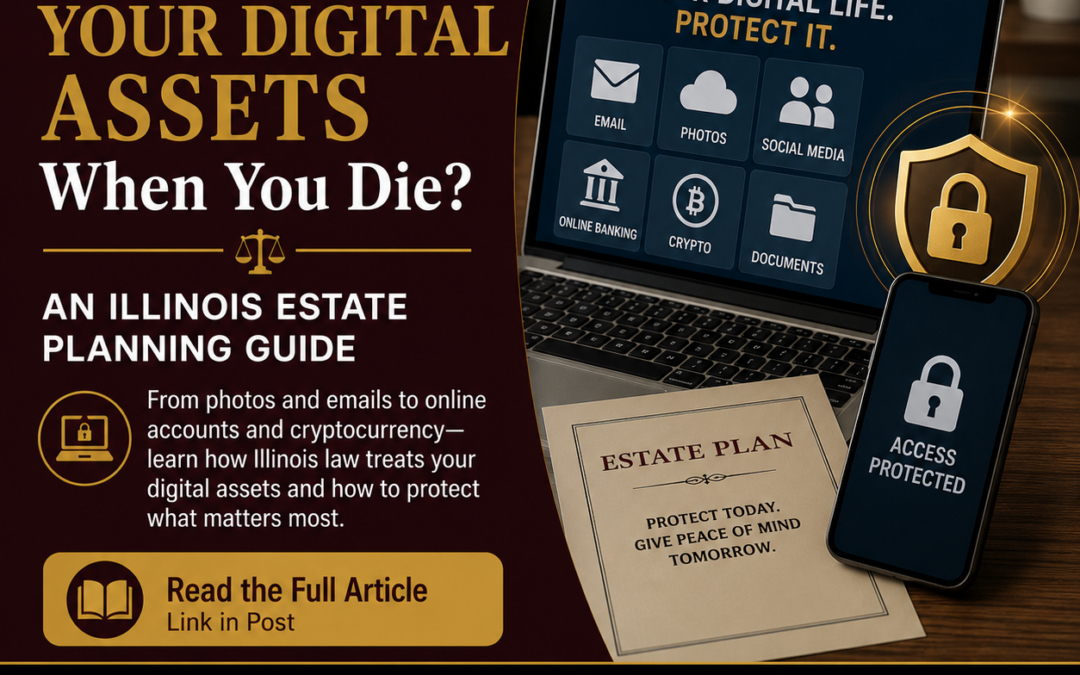
What Happens to Your Digital Assets When You Die? An Illinois Estate Planning Guide
Most people think estate planning is about houses, bank accounts, and personal property. But today, some of the most valuable and sentimental assets we own exist entirely online.
Family photos stored in the cloud. Email accounts. Social media profiles. Online banking. Cryptocurrency. Even business records and client communications.
So what happens to all of that when you pass away?
In Illinois, the answer depends on whether you planned ahead.
What Are “Digital Assets”?
Digital assets include far more than just financial accounts. Common examples include:
- Email accounts (Gmail, Outlook, Yahoo)
- Social media profiles (Facebook, Instagram, LinkedIn)
- Cloud storage (Google Drive, iCloud, Dropbox)
- Online banking and investment accounts
- Cryptocurrency and digital wallets
- Online subscriptions and reward accounts
- Digital photos, videos, and documents
- Business websites and domain names
If your loved ones don’t have legal authority to access these accounts, they may be permanently locked out, even if they know your passwords.
Illinois Law and Digital Assets: What Families Need to Know
Illinois has adopted the Revised Uniform Fiduciary Access to Digital Assets Act (RUFADAA). This law governs when and how someone acting on your behalf can access your digital accounts after death or incapacity.
Under Illinois law:
- Online service providers control access by default
- Passwords alone do not grant legal authority
- Families often hit roadblocks without proper estate planning documents
Simply put: without clear legal permission, your executor or trustee may have no right to access your digital life.
Why Putting Passwords in a Will Is a Bad Idea
Many people try to solve this by listing usernames and passwords in their will. Unfortunately, this often creates more problems than it solves.
Here’s why:
- Wills become public record once probate is opened
- Passwords can be outdated by the time the will is used
- Terms of service often prohibit password sharing
- It may violate state and federal privacy laws
Illinois law requires specific authorization, not just access credentials.
How to Legally Give Access to Digital Assets in Illinois
A proper Illinois estate plan can give trusted individuals the authority they need without violating privacy laws.
This typically includes:
✔ Powers of Attorney
Allows your agent to manage digital assets during incapacity.
✔ Wills
Can grant an executor authority to access, manage, or close digital accounts after death.
✔ Trusts
Often the best tool for managing digital assets privately and efficiently.
✔ Account-Level Tools
Some platforms (like Facebook or Google) allow you to name a legacy contact or inactive account manager.
When these tools work together, families avoid unnecessary delays, court involvement, and frustration.
What Happens If You Don’t Plan?
When no digital asset planning is done, families often face:
- Lost family photos and videos
- Inaccessible financial records
- Frozen cryptocurrency with no recovery option
- Business disruptions
- Lengthy court proceedings to request access, often denied
Unfortunately, these losses are usually permanent.
Practical Steps You Can Take Now
If you want to protect your digital assets:
- Make a list of your digital accounts (not passwords)
- Decide who should have access and for what purpose
- Include proper digital asset language in your estate plan
- Keep the information updated as accounts change
- Work with an Illinois estate planning attorney who understands digital assets
Protect More Than Just Property
Estate planning isn’t just about money. It’s about protecting memories, relationships, and the pieces of your life that matter most, including the digital ones.
If you have questions about how Illinois law treats digital assets or want to make sure your estate plan covers them properly, help is available.
📞 (708) 529-7794 | Law Office of Jonathan W. Cole P.C. — “Your Neighborhood Law Firm.”