Major Life Events That Mean It’s Time to Visit Your Estate Planning Attorney
Most people think estate planning is something you do once, sign the documents, and never think about again.
In reality, an estate plan should evolve as your life changes. A will, trust, or power of attorney that made perfect sense five years ago may no longer reflect your wishes or adequately protect your loved ones.
At the Law Office of Jonathan W. Cole P.C., one of the most common things we hear is, “I didn’t realize I needed to update my estate plan.”
The good news? Many problems can be avoided simply by reviewing your estate plan after major life events.
Here are some of the most important times to schedule an appointment with your estate planning attorney.
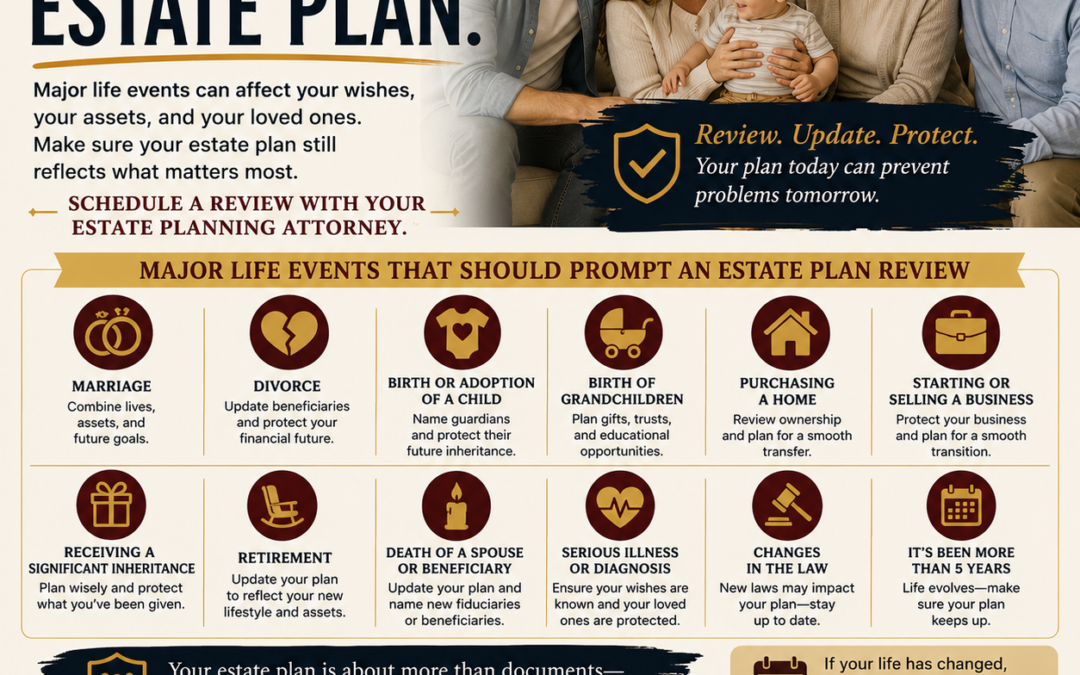
Marriage
Getting married is one of the biggest reasons to review your estate plan.
While Illinois law provides certain inheritance rights for spouses, relying solely on state law may not accomplish your goals.
After getting married, you should review:
- Your Will
- Your Trust
- Powers of Attorney
- Beneficiary designations
- Property ownership
- Guardianship nominations (if you have children)
Marriage is also a great time to discuss how you and your spouse want your assets handled if something unexpected happens.
Divorce
A divorce can dramatically affect your estate plan.
Although Illinois law automatically revokes some provisions benefiting a former spouse, not every asset is governed by your will.
For example, you may still have:
- Life insurance policies
- Retirement accounts
- Payable-on-death bank accounts
- Transfer-on-death deeds
These beneficiary designations often remain in effect unless you update them.
A divorce should always trigger a complete estate plan review.
The Birth or Adoption of a Child
Welcoming a child into your family changes everything.
One of the most important questions parents should answer is:
Who would raise my child if something happened to me?
An estate plan allows you to:
- Nominate a guardian
- Create trusts to manage inherited assets
- Determine when children receive their inheritance
- Name someone to manage money on your child’s behalf
Without planning, a court—not you—may decide who manages your child’s inheritance.
The Birth of Grandchildren
Grandchildren often inspire families to revisit their estate plans.
Many grandparents choose to:
- Leave specific gifts
- Create education trusts
- Establish college savings plans
- Ensure grandchildren inherit if their parent dies first
A properly drafted plan can provide flexibility while protecting future generations.
Purchasing a Home
Buying a home is often the largest financial investment a person makes.
Depending on how the property is titled, your estate plan may need updating.
You should discuss:
- Joint ownership
- Transfer on Death Instruments
- Trust ownership
- Mortgage considerations
- Probate avoidance strategies
Proper planning can help simplify the transfer of your home to your loved ones.
Starting or Selling a Business
Business owners face unique estate planning challenges.
Without planning:
- Ownership disputes can arise.
- Operations may be disrupted.
- Family members may inherit businesses they cannot manage.
Your estate plan should coordinate with:
- Buy-sell agreements
- LLC operating agreements
- Corporate documents
- Succession plans
Whether you’re launching a new business or preparing for retirement, your estate plan should reflect those changes.
Receiving a Significant Inheritance
An inheritance can significantly change your financial picture.
You may want to:
- Protect inherited assets
- Minimize future estate taxes
- Coordinate trusts
- Update beneficiaries
- Review investment strategies
An inheritance is an excellent opportunity to revisit your long-term planning goals.
Retirement
Retirement changes both your finances and your priorities.
During retirement, many people:
- Begin drawing retirement accounts
- Downsize their homes
- Relocate
- Spend more time traveling
- Focus on charitable giving
This is also a good time to review:
- Healthcare Powers of Attorney
- Living Wills
- Financial Powers of Attorney
- Trust funding
Your estate plan should reflect how your retirement assets will be managed during your lifetime and after your death.
The Death of a Spouse or Beneficiary
Losing a loved one is emotionally overwhelming.
Unfortunately, it is also one of the most important times to review your estate plan.
You may need to:
- Name new beneficiaries
- Appoint new fiduciaries
- Update trustees
- Change executors
- Revise inheritance plans
Many estate plans become outdated after the death of a spouse or close family member.
A Serious Illness or Medical Diagnosis
Health issues often highlight the importance of estate planning.
If you’ve been diagnosed with:
- Alzheimer’s disease
- Parkinson’s disease
- Cancer
- Multiple sclerosis
- Dementia
- Another serious illness
Now is the time to ensure your wishes are documented while you have legal capacity.
Important documents include:
- Healthcare Power of Attorney
- Financial Power of Attorney
- Living Will
- HIPAA Authorizations
Waiting too long can make planning much more difficult.
Changes in the Law
Estate planning laws are not static.
Federal and Illinois laws change regularly, affecting:
- Estate taxes
- Trust administration
- Powers of attorney
- Probate procedures
- Guardianship laws
Even if nothing has changed in your personal life, reviewing your estate plan every three to five years helps ensure it still accomplishes your goals under current law.
It’s Been More Than Five Years
Perhaps the biggest reason to schedule a meeting is simply that it’s been a while.
Ask yourself:
- Are all of my beneficiaries still living?
- Are my named executors still the right people?
- Have I moved?
- Have my assets changed?
- Has my family changed?
- Would I make the same decisions today?
If you hesitate on any of those questions, it’s probably time for a review.
Estate Planning Is About More Than Documents
Estate planning isn’t just about deciding who receives your property.
It’s about protecting your family during life’s biggest transitions.
Whether you’re welcoming a new child, retiring after decades of work, caring for aging parents, or recovering from the loss of a loved one, your estate plan should grow with you.
The best estate plans aren’t simply signed and forgotten, they’re reviewed and updated as life changes.
Don’t Wait Until There’s a Crisis
Many people don’t think about estate planning until something goes wrong. By then, options may be limited.
Scheduling a periodic review with an experienced estate planning attorney can help ensure your documents continue to reflect your wishes, protect your loved ones, and avoid unnecessary complications down the road.
If you have questions about your estate plan or it’s been several years since you’ve reviewed your documents, contact the Law Office of Jonathan W. Cole P.C. at (708) 529-7794 Your Neighborhood Law Firm.