
How Illinois Judges Decide Child Custody: Key Factors Parents Should Know
When parents separate or divorce, one of the most emotional and important questions is who will have custody of the children. In Illinois, courts do not use the term “custody” in the traditional sense. Instead, judges decide parental responsibilities, which include decision-making authority and parenting time.
Understanding how judges make these decisions can help parents prepare, protect their children, and avoid costly mistakes.
The Legal Standard: The Child’s Best Interests
Illinois courts decide all parenting matters based on the best interests of the child, not the preferences or convenience of either parent. Judges are required by statute to evaluate specific factors outlined in the Illinois Marriage and Dissolution of Marriage Act.
No single factor controls the outcome. Judges look at the total picture of a child’s life and needs.
Factors Illinois Judges Consider in Custody Decisions
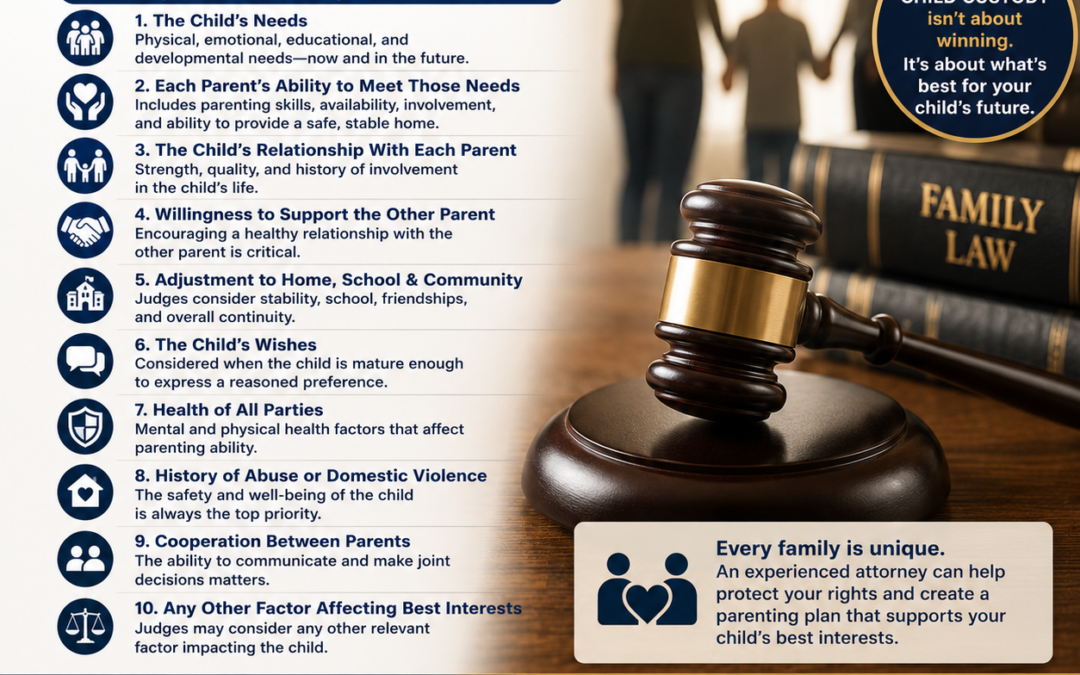
1. The Child’s Needs
Judges consider the child’s physical, emotional, educational, and developmental needs, both now and in the future. Stability and continuity are especially important, particularly for younger children.
2. Each Parent’s Ability to Meet Those Needs
Courts evaluate each parent’s ability to provide a safe, stable, and nurturing environment. This includes parenting skills, availability, involvement in school and medical care, and ability to make sound decisions for the child.
3. The Child’s Relationship With Each Parent
Judges look closely at the strength and quality of the child’s relationship with each parent, including who has historically been the primary caregiver and how actively each parent has participated in the child’s life.
4. Willingness to Support the Child’s Relationship With the Other Parent
Illinois courts strongly favor parents who encourage a healthy relationship between the child and the other parent. Attempts to alienate a child, interfere with parenting time, or undermine the other parent can seriously harm a custody case.
5. The Child’s Adjustment to Home, School, and Community
Maintaining consistency in the child’s daily life is a priority. Judges consider how a custody arrangement will affect the child’s school, friendships, extracurricular activities, and overall sense of stability.
6. The Child’s Wishes (When Appropriate)
If the child is mature enough to express a reasoned preference, the court may consider their wishes. However, a child does not get to “choose” where to live, and their preference is only one factor among many.
7. Mental and Physical Health of All Parties
Courts may consider mental or physical health issues that affect parenting ability. A diagnosis alone is not disqualifying—what matters is how it impacts a parent’s ability to care for the child.
8. History of Domestic Violence or Abuse
Any history of domestic violence, abuse, neglect, or threats toward the child or another household member weighs heavily in custody decisions. The court’s primary concern is the child’s safety.
9. Cooperation Between Parents
Judges evaluate whether parents can communicate and cooperate on child-related issues. High conflict, refusal to co-parent, or inability to make joint decisions may influence how responsibilities are allocated.
10. Any Other Factor Affecting the Child’s Best Interests
Illinois law allows judges to consider any relevant factor, giving courts flexibility to address unique family situations.
Custody Is Not About “Winning”
Illinois courts do not reward parents for being aggressive or punitive. Judges are focused on creating a parenting plan that allows the child to thrive, emotionally, academically, and socially.
Parents who demonstrate responsibility, cooperation, and a child-centered mindset are far more likely to receive favorable outcomes.
Why Legal Guidance Matters in Custody Cases
Custody disputes can permanently shape a child’s future and a parent’s role in their life. Mistakes made early, such as informal agreements, emotional reactions, or poorly drafted parenting plans, can be difficult to undo.
An experienced Illinois family law attorney can:
- Present evidence effectively
- Protect your parental rights
- Advocate for a parenting plan that truly serves your child’s best interests
- Help reduce conflict and avoid unnecessary court battles
Talk to an Illinois Family Law Attorney Today
If you are facing a custody or parenting time dispute, you do not have to navigate it alone.
Call the Law Office of Jonathan W. Cole P.C. at (708) 529-7794
Visit www.jwcolelaw.com
Law Office of Jonathan W. Cole P.C.
Your Neighborhood Law Firm.