
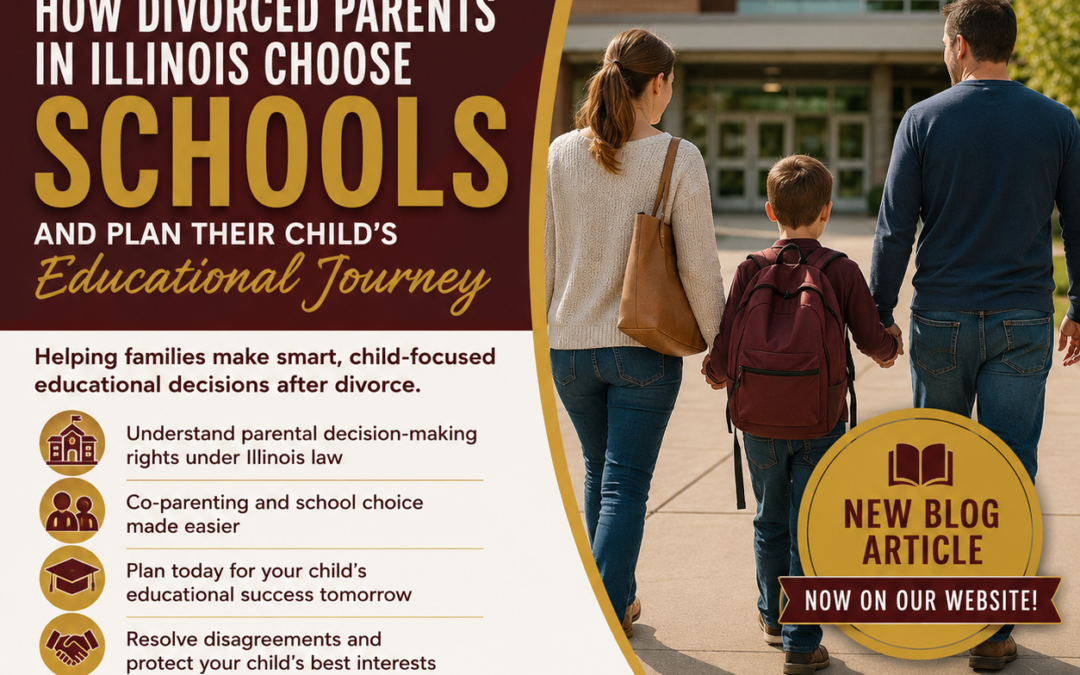
How Divorced Parents in Illinois Choose Schools and Plan Their Child’s Education
Divorce changes many things for families, but one thing that should remain steady is a child’s education.
For divorced or separated parents in Illinois, choosing a school and planning a child’s educational path can raise important legal and practical questions.
Who decides where the child goes to school?
What happens if parents disagree?
And how can families plan ahead to avoid conflict?
Here’s what Illinois parents need to know.
Understanding Decision-Making Authority Under Illinois Law
Illinois no longer uses the term “custody.” Instead, courts focus on parental responsibilities, which include decision-making authority for major areas of a child’s life.
One of those major areas is education.
A parenting plan or court order will typically specify whether:
- One parent has sole decision-making authority over education, or
- Both parents share joint decision-making authority
This distinction matters …a lot.
When One Parent Has Sole Educational Decision-Making
If a parenting plan gives one parent sole authority over education, that parent generally has the legal right to:
- Choose the child’s school (public, private, or charter)
- Decide on special education services or accommodations
- Approve tutoring, educational evaluations, or major academic changes
The other parent still has the right to access school records and stay informed, but they may not be able to override the decision unless it violates the court order or clearly harms the child’s best interests.
When Parents Share Educational Decision-Making
When decision-making is joint, both parents must work together on major educational choices.
This often includes:
- Selecting or changing schools
- Decisions about private school enrollment
- Special education plans (IEPs or 504 plans)
- Significant changes to a child’s academic program
Joint decision-making requires communication and cooperation, and when that breaks down, disputes can arise.
If parents cannot agree, the court may need to step in and decide what is in the best interests of the child.
School Choice, Residency, and Parenting Time
In many Illinois school districts, enrollment is tied to residency. For divorced parents, this raises important questions:
- Which parent’s address determines the school district?
- What happens if parents live in different districts?
- Can a child attend school in one district while spending parenting time in another?
These issues should be addressed clearly in the parenting plan. Without clarity, families may face school enrollment disputes or unexpected disruptions.
Planning a Child’s Educational Journey After Divorce
Smart planning can prevent conflict and protect children from unnecessary stress. Parents should consider addressing:
- Long-term school plans (elementary through high school)
- Private school tuition responsibilities, if applicable
- How future disagreements will be resolved
- Procedures for school changes or relocations
- Access to teachers, records, and school events for both parents
Clear language in a parenting plan can reduce misunderstandings and keep the focus where it belongs — on the child’s success.
When Modifications May Be Necessary
As children grow, their educational needs change. A parenting plan may need to be modified if:
- A child develops special educational needs
- One parent relocates
- A school becomes unavailable or inappropriate
- The existing arrangement no longer serves the child’s best interests
Illinois courts allow modifications when circumstances change, but the process should be handled carefully and legally.
Final Thoughts
Education is one of the most important investments parents make in their children’s future. For divorced parents in Illinois, understanding who makes decisions, and planning ahead, can make all the difference.
A well-drafted parenting plan doesn’t just resolve legal issues. It creates stability, consistency, and peace of mind for children during a time of change.
If you have questions about parenting plans, educational decision-making, or modifying an existing court order, contact the Law Office of Jonathan W. Cole P.C. at (708) 529-7794 Your Neighborhood Law Firm.
📞 (708) 529-7794 | Law Office of Jonathan W. Cole P.C. “Your Neighborhood Law Firm.”