
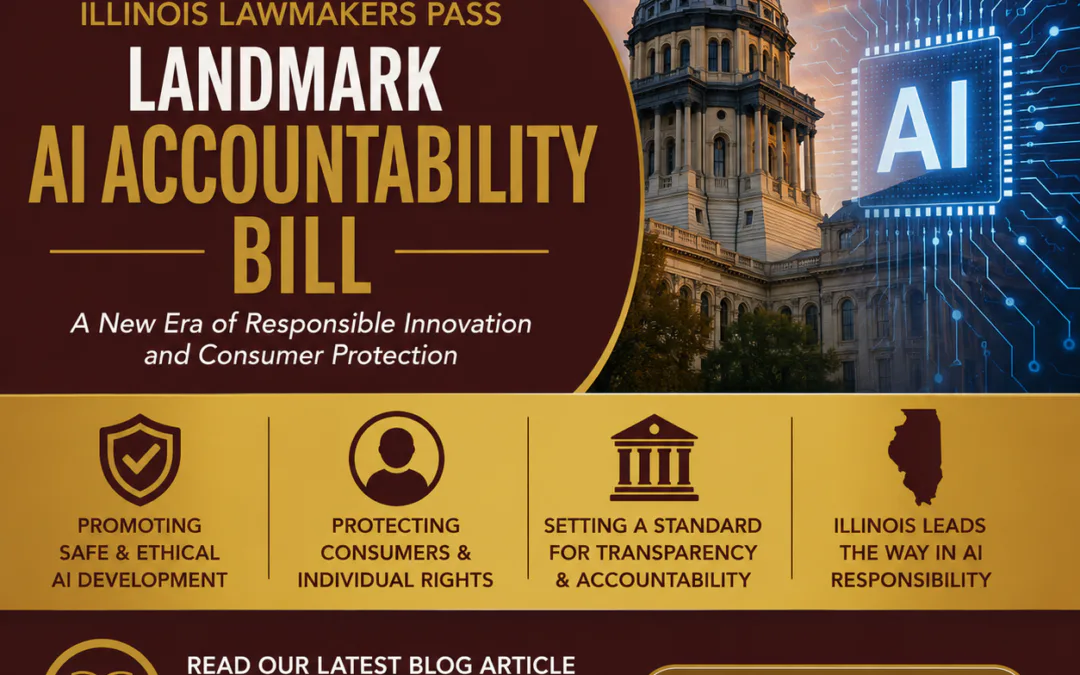
Illinois Passes Landmark AI Accountability Bill, What It Means for Everyday People
Artificial intelligence (AI) is no longer just a topic of science fiction, it’s part of our daily lives, from search tools to customer support, healthcare, and more. But as these technologies become more powerful, questions about safety, transparency, and accountability have become front and center.
Recently, lawmakers in Illinois took a major step toward regulating advanced AI systems, passing a bill that could become a national model for AI oversight.
Here’s what Illinois families and businesses should know about this new law and how it might affect you.
What Is the New Illinois AI Bill?
In late May 2026, the Illinois Legislature passed Senate Bill 315, a measure aimed at increasing transparency and safety for the most powerful artificial intelligence systems. The bill passed the House unanimously and now heads to Governor J.B. Pritzker’s desk, where he has indicated he plans to sign it into law.
This legislation would make Illinois one of only a few states, alongside New York and California, to set strong standards for so-called “frontier” AI models, the most advanced systems developed by major companies.
What Does the AI Accountability Law Do?
The bill focuses on three key areas:
🧠 1. Transparency Plans
Large AI developers would be required to publish a detailed plan explaining how they measure, monitor, and manage the capabilities and risks of their AI systems. This creates a public commitment to safety that everyone can see.
🔍 2. Independent Audits
Rather than just reporting their own safety procedures, companies would have to undergo third-party audits to verify they are actually following through on their safety commitments. This is a major step beyond what most current laws require.
⚖️ 3. Enforcement and Penalties
If companies fail to comply with the law’s requirements, the Illinois Attorney General could impose civil penalties of up to $3 million per violation, showing that the state intends to take enforcement seriously.
Why This Matters for Illinois Residents
You might wonder: Why should any of this matter to me? The answer is simple, AI systems touch many aspects of daily life:
- AI can influence what news you see, how your medical records are organized, or whether you qualify for certain services.
- It can automate decisions that affect employment, housing, and financial services.
- Advanced AI models can generate highly realistic content, making transparency and accountability even more important.
By requiring independent oversight and clearer public reporting, Illinois is trying to ensure these technologies are developed and used responsibly, protecting individuals and communities alike.
Balancing Innovation and Safety
Supporters of the bill have said it’s not meant to stop AI innovation, but to make sure innovation happens safely and transparently. Lawmakers emphasized that Illinois should be a leader in setting standards that protect people while still encouraging technological growth.
That balance matters, especially as AI continues to evolve faster than federal regulations.
What’s Next?
Once Governor Pritzker signs the bill, Illinois will implement this new framework in the coming years. Developers of frontier AI models will begin publishing safety plans and submitting to annual or periodic third-party audits.
This could set a precedent for other states and even federal policymakers who are still working on how best to regulate artificial intelligence.
A Closing Thought
Artificial intelligence has the potential to bring enormous benefits, but only if its development and use are grounded in accountability, safety, and respect for public welfare. Illinois’ new bill is one of the most ambitious efforts in the nation to strike that balance.
Watch for future updates as this law becomes reality and other states consider similar approaches.
If you have questions about AI regulation or how new laws might affect your business or personal life, we’re here to help.
📞 (708) 529-7794 | Law Office of Jonathan W. Cole P.C. — “Your Neighborhood Law Firm.”