
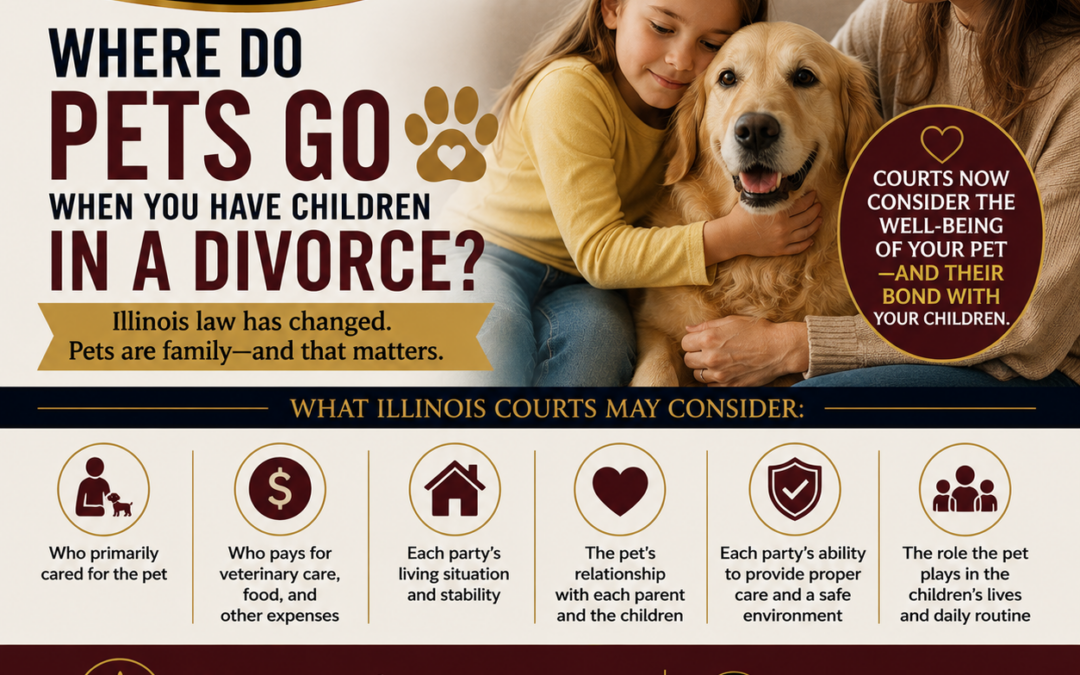
Where Do Pets Go When You Have Children in an Illinois Divorce?
Understanding Illinois’s New Approach to Companion Animals
For many families, pets are not “property”, they are part of the family. When parents divorce, one of the most emotional questions that arises is: What happens to the family pet, especially when children are involved?
Illinois law has evolved to better reflect this reality. Recent statutory changes now give courts more flexibility to consider a pet’s well-being and a family’s dynamics, including the role children play in caring for and bonding with the animal.
Here’s what Illinois families should know.
Illinois No Longer Treats Pets Like Furniture
Historically, pets were treated like any other piece of personal property in a divorce, similar to a couch or a television. That approach often felt harsh and unrealistic.
Illinois changed that.
Under current Illinois law, pets are classified as “companion animals,” and courts are now allowed to consider the well-being of the pet when deciding who will be awarded ownership.
This shift matters, especially when children have strong emotional bonds with a family pet.
How Illinois Courts Decide Who Gets the Pet
When spouses cannot agree, a judge may award ownership or shared ownership of a companion animal. In making that decision, courts may consider factors such as:
- Who primarily cared for the pet
- Who pays for veterinary care, food, and grooming
- Each party’s living situation after the divorce
- Each party’s ability to provide proper care
- The pet’s routine and stability
Importantly, courts may also look at the relationship between the pet and the children.
When Children Are Involved, Pets Matter More
For children, pets often provide comfort, emotional support, and a sense of normalcy, especially during the stress of divorce. Illinois courts increasingly recognize this reality.
While pets are not treated the same as children, judges may consider:
- Which parent the children primarily live with
- Whether the pet has been a constant presence in the children’s daily lives
- Whether keeping the pet with the children promotes stability
In many cases, the pet ends up living with the parent who has the majority of parenting time, particularly if the children are closely bonded with the animal.
Can Pets Be “Shared” Like Parenting Time?
Illinois law allows for joint ownership of a companion animal, but this is usually only practical when parents communicate well.
Shared pet arrangements may include:
- The pet living primarily with one parent
- Visitation schedules tied to parenting time
- Shared financial responsibility for care
That said, courts are cautious. If conflict is high, judges often prefer awarding the pet to one household to avoid ongoing disputes.
What You Can Do to Protect Your Relationship With a Pet
If your pet matters to you, and to your children, it’s important to plan ahead. Helpful steps include:
- Documenting who provides daily care
- Keeping records of veterinary bills and expenses
- Avoiding informal “handshake” agreements
- Addressing pet ownership clearly in the divorce agreement
An experienced divorce attorney can help ensure the issue is handled thoughtfully and clearly, rather than left to chance.
Final Thoughts
Illinois law now recognizes what families have always known: pets are more than property. When children are involved, courts increasingly focus on stability, emotional bonds, and responsible care, not just ownership paperwork.
If you’re facing a divorce and have questions about pets, parenting time, or protecting your family’s future, legal guidance can make all the difference.
📞 If you have questions about your estate plan or a probate matter, contact the Law Office of Jonathan W. Cole P.C. at (708) 529-7794 — Your Neighborhood Law Firm.