
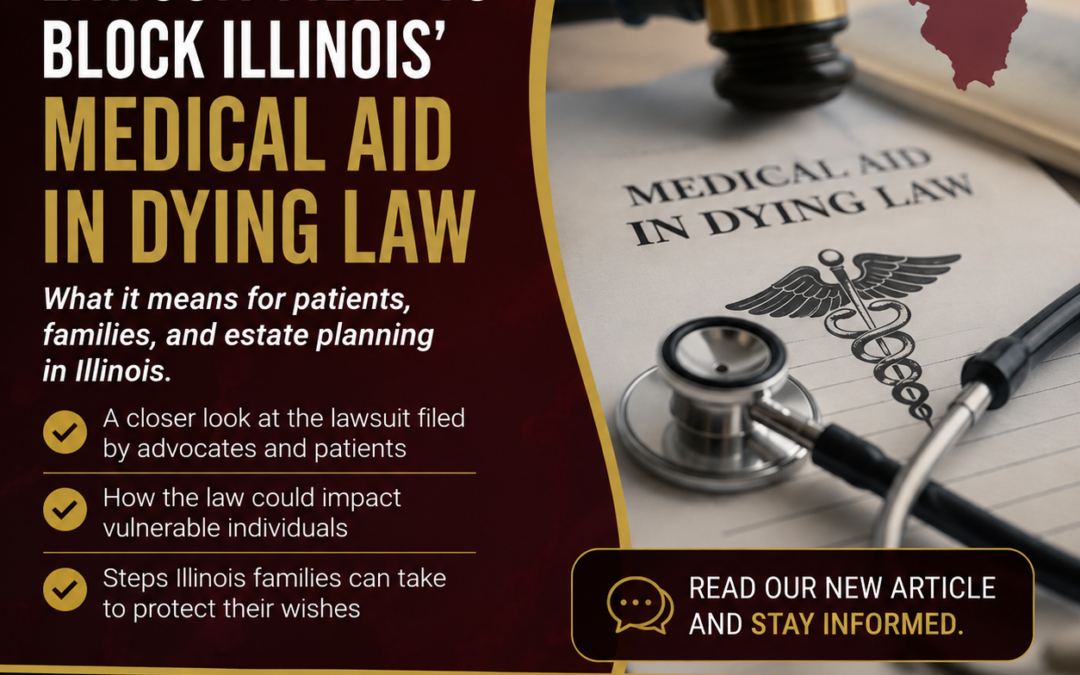
Understanding the New Illinois Lawsuit Challenging the Medical Aid-in-Dying Law
Medical aid in dying is a deeply personal and often emotional topic for families facing the realities of terminal illness. Recently, that conversation in Illinois took a legal turn. Disability advocates and patients have filed a federal lawsuit seeking to block the upcoming medical aid-in-dying law before it goes into effect this September.
Here’s what Illinois families need to know, in plain English.
What Is the Medical Aid-in-Dying Law?
In December 2025, Illinois became the first Midwestern state to approve what’s often called the medical aid-in-dying law, officially the End-of-Life Options for Terminally Ill Patients Act (EOLA).
Under EOLA:
- Adults diagnosed with a terminal illness expected to result in death within six months may seek a doctor’s help to obtain prescription medication designed to end their life peacefully.
- Patients must make two oral requests at least five days apart and submit a written request with witness signatures.
The law is scheduled to take effect September 12, 2026.
Why Are People Suing to Block It?
A group of disability rights advocates, healthcare professionals, and two Illinois residents filed a federal lawsuit arguing the law should not take effect. The key claims include:
1. Discrimination Against People With Disabilities
The lawsuit centers on the idea that the law targets people with serious health conditions and may send a harmful message about the value of disabled lives. Plaintiffs argue that because a disabled person might request aid in dying, the law creates pressures unrelated to a terminal illness.
As one plaintiff, Chicago resident Ebony Payne, who is quadriplegic, explained, there’s concern that vulnerable patients could be at risk without sufficient protections.
2. Lack of Oversight and Safeguards
The complaint also claims the law lacks enough protections to make sure decisions to seek medical aid in dying are truly voluntary and free from coercion, without outside influence or rushed judgments.
3. Procedural Concerns
In addition, the lawsuit argues the law violates the U.S. Constitution’s due process and equal protection principles because it doesn’t include certain safeguards or oversight mechanisms plaintiffs believe are necessary.
What Supporters Say
Supporters of the law, including medical groups and patient advocacy organizations, emphasize that safeguards are built into the statute. Physicians must verify the patient’s diagnosis, confirm the patient is mentally competent, and explore all end-of-life care options, such as hospice or palliative care, before prescribing any medication.
They argue the purpose is to provide autonomy and dignity for terminally ill adults when other options have been exhausted.
How This Affects Illinois Families
If the lawsuit succeeds in blocking the law before September, medical aid in dying may not become available in Illinois on schedule. Families with loved ones facing terminal illnesses may want to understand how this ongoing legal challenge could affect future care options.
Whether you support it or oppose it, this legal dispute underscores how complex and sensitive end-of-life decisions can be, and why it’s critical to have clear planning and communication in place.
If you have questions about your estate plan or a probate matter, contact the Law Office of Jonathan W. Cole P.C. at (708) 529-7794 — Your Neighborhood Law Firm.