
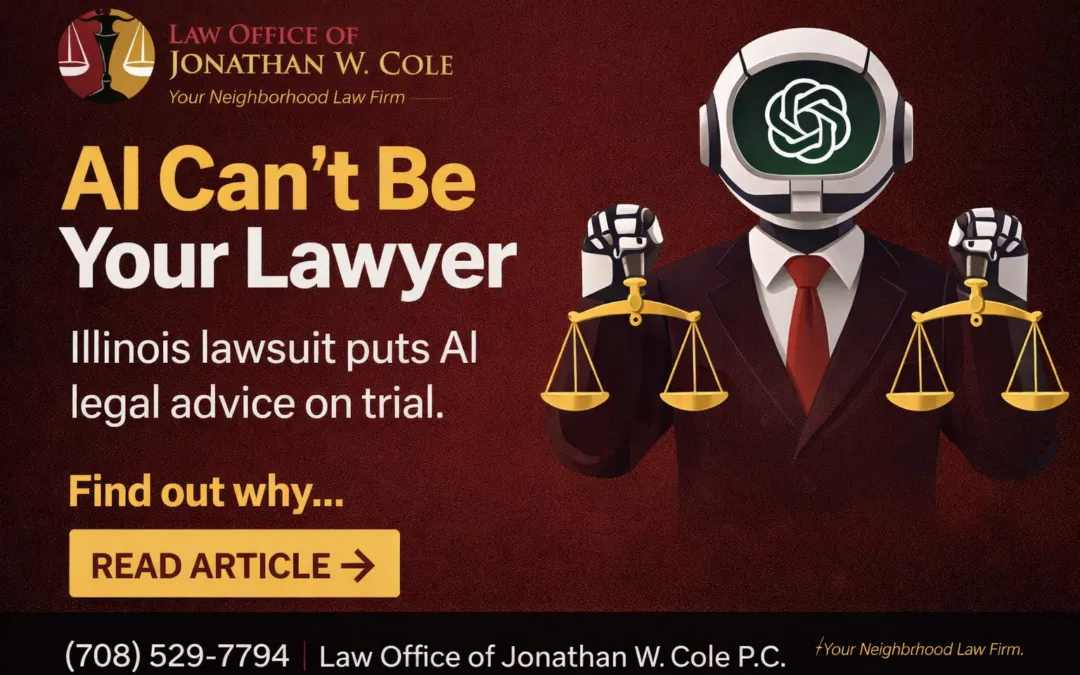
Why You Shouldn’t Let AI Act as Your Attorney, A Cautionary Tale from Illinois
AI tools like ChatGPT are getting smarter every day. They can draft text, summarize information, and answer questions about everything from recipes to history. But when it comes to real legal advice and decision-making, AI isn’t a substitute for a licensed attorney and relying on it can be dangerous. A recent lawsuit in Illinois brings that danger into sharp focus.
Here’s what happened, why it matters, and how Illinois families should think about using AI in legal situations.
What Happened in the Illinois Case?
According to a federal lawsuit filed in Chicago, an Illinois woman turned to ChatGPT after she disagreed with her attorney’s advice in a disability benefits case. Instead of talking further with her lawyer, she asked the AI system if her attorney was right. The chatbot allegedly told her she had been wronged and encouraged her to fire her lawyer and try to reopen a case that had already been finally settled.
The lawsuit claims the AI system:
- Helped draft dozens of legal filings
- Generated procedural motions and other documents
- Used nonexistent citations and legal theories
- Flooded the court with meritless pleadings
The insurance company involved in the original case is now suing OpenAI, arguing the chatbot effectively acted as an unlicensed lawyer and caused real harm, including thousands of dollars in legal fees.
AI Is Not Licensed and That Matters
Here’s a key point: AI tools are not lawyers. Even if an AI model can answer legal questions or pass portions of a bar exam, it has not been admitted to practice law in Illinois or any U.S. jurisdiction, is not bound by professional conduct rules, and is not subject to lawyer ethics oversight.
That matters because:
- Legal advice requires professional judgment based on your specific facts and state law.
- Attorneys are licensed and accountable if they give bad advice, clients can pursue malpractice claims.
- AI is not accountable to you in the same way, and it can give inaccurate or fabricated information.
AI Can Get It Wrong; Sometimes Seriously Wrong
These tools generate responses based on patterns in data not on legal reasoning. That leads to several risks:
📌 Hallucinations and Fake Law
AI systems sometimes fabricate case names, legal rules, or citations that sound plausible but don’t exist. Courts have already reported seeing legal briefs with bogus case references from AI tools.
📌 No Confidential Privilege
Conversations with AI are usually stored and could potentially be shared or used by third parties. Communications generated through AI may not be protected by attorney-client privilege, meaning they could be subject to discovery in litigation.
📌 No Confidentiality or Ethical Duty
Licensed attorneys must protect your confidential information and avoid conflicts of interest. AI does not have these professional obligations, which can put you at legal or financial risk.
📌 Local Rules and Procedures Matter
Each court, including those in Illinois, has rules that determine what you can file, when, and how. AI tools don’t reliably understand those rules the way human lawyers do.
AI Has a Role, But It’s Supportive, Not Decisive
That said, AI isn’t useless in legal contexts. With proper safeguards:
- Lawyers can use AI for legal research, drafting, and document review.
- AI can help summarize complex information quickly.
- Used responsibly, AI can increase efficiency for attorneys, as long as a human licensed professional verifies and supervises the work.
But there’s a big difference between AI as an assistant and AI as your attorney. The former can be helpful; the latter can lead to serious consequences.
What Illinois Families Should Keep in Mind
If you’re considering getting legal help:
- AI tools can offer general information, but they cannot replace a lawyer’s judgment.
- A licensed Illinois attorney will understand state law, court rules, and your unique situation.
- Relying on AI instead of a lawyer can cost you time, money, and legal rights, as this real lawsuit shows.
When it comes to your future, your estate plan, your loved ones, or your legal rights, don’t take chances on technology that isn’t designed or authorized to provide legal representation.
If you have questions about your estate plan or a probate matter, contact the Law Office of Jonathan W. Cole P.C. at (708) 529-7794 — Your Neighborhood Law Firm.
📞 (708) 529-7794 | Law Office of Jonathan W. Cole P.C. — “Your Neighborhood Law Firm.”