
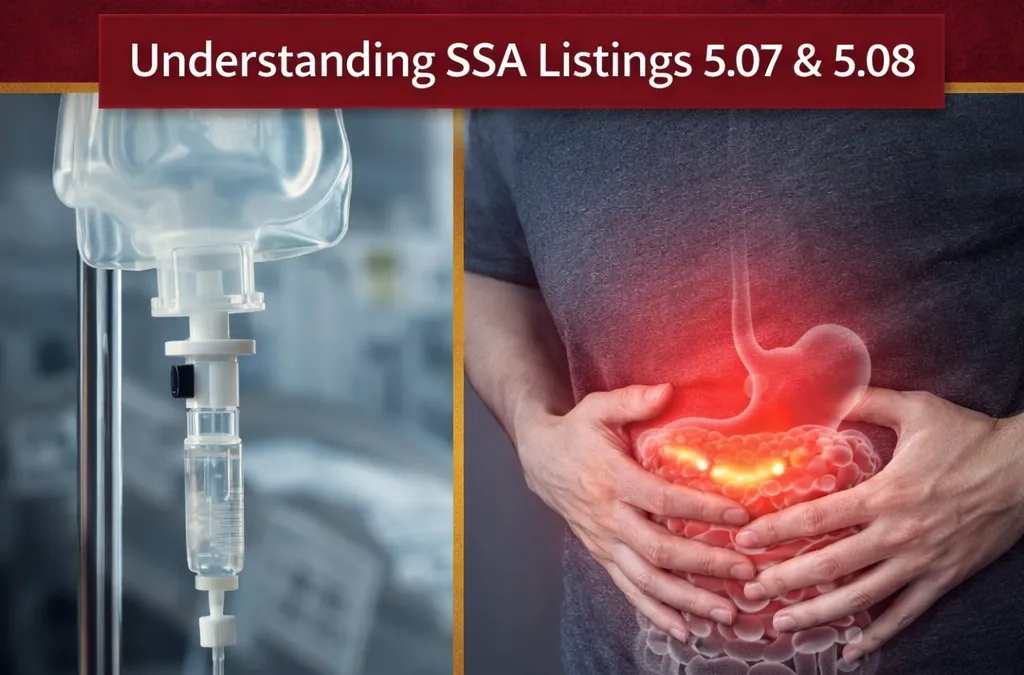
Digestive disorders can do far more than cause discomfort. For some people, they completely disrupt the body’s ability to absorb nutrients, maintain weight, or even survive without medical intervention.
The Social Security Administration (SSA) recognizes this reality and includes specific digestive conditions in its Blue Book, the medical guide used to evaluate disability claims.
Two of the most serious listings are 5.07 (Intestinal Failure) and 5.08 (Extreme Weight Loss Due to Digestive Disorders). Understanding these listings can make a critical difference if you or a loved one is unable to work due to a severe gastrointestinal condition.
Listing 5.07: Intestinal Failure Requiring Long-Term Parenteral Nutrition
What Is Intestinal Failure?
Intestinal failure occurs when the intestines can no longer absorb enough nutrients and fluids to sustain life. This condition often results from:
-
Short bowel syndrome (after significant bowel surgery)
-
Chronic intestinal motility disorders
-
Extensive disease of the small bowel lining
When the digestive system fails at this level, patients may depend on daily intravenous nutrition, known as parenteral nutrition, delivered through a central venous catheter.
When Does Intestinal Failure Qualify for Disability?
Under SSA Listing 5.07, intestinal failure qualifies for disability benefits when:
-
The condition is caused by short bowel syndrome, chronic motility disorders, or extensive small bowel disease and
-
The individual has required daily parenteral nutrition via a central venous catheter for at least 12 consecutive months
This listing recognizes that long-term dependence on IV nutrition is not only medically serious, but also incompatible with maintaining full-time employment.
What Medical Evidence Is Required?
Successful claims typically include:
-
Hospital and surgical records
-
Gastroenterology treatment notes
-
Documentation of parenteral nutrition prescriptions
-
Proof of central venous catheter use
-
Long-term treatment history showing ongoing dependence
Listing 5.08: Severe Weight Loss Due to Digestive Disorders
Why Weight Loss Matters in Disability Claims
Severe weight loss is often a sign that the body is no longer absorbing nutrients properly, even when a person follows medical advice. Conditions like Crohn’s disease, celiac disease, chronic pancreatitis, or other digestive disorders can cause this level of decline.
SSA Requirements Under Listing 5.08
A digestive disorder may qualify under Listing 5.08 when all of the following are met:
-
Weight loss occurs despite adherence to prescribed medical treatment
-
The individual has a Body Mass Index (BMI) below 17.50
-
The low BMI is documented on at least two medical evaluations
-
The evaluations are at least 60 days apart
-
All measurements occur within a consecutive 12-month period
This listing focuses on objective measurements, not just symptoms. Even if someone “looks okay,” documented BMI levels can be decisive.
Common Challenges in These Claims
Many claims are denied because:
-
BMI calculations are missing or inconsistent
-
Medical records do not clearly show treatment compliance
-
Doctors do not connect weight loss directly to the digestive disorder
An experienced attorney can help ensure the medical record tells the full story.
Why These Listings Matter for Illinois Families
Living with intestinal failure or extreme weight loss is physically exhausting and financially devastating. Many people are unable to maintain steady employment long before they realize they may qualify for Social Security Disability benefits.
Understanding Listings 5.07 and 5.08 can help Illinois residents:
-
Avoid unnecessary denials
-
Strengthen their medical evidence
-
Protect income during long-term illness
We’re Here to Help
Digestive disability claims are medically complex and often misunderstood by Social Security reviewers. You do not have to navigate this process alone.
📞 If you have questions about your estate plan or a probate matter, contact the Law Office of Jonathan W. Cole P.C. at (708) 529-7794 — Your Neighborhood Law Firm.