
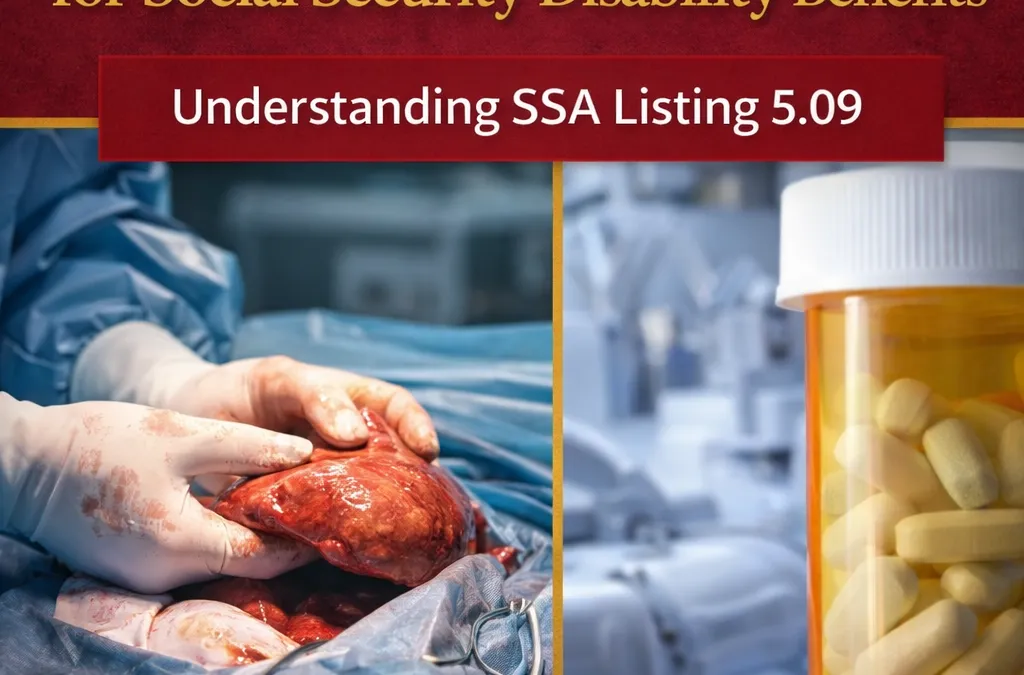
When a Liver Transplant Qualifies for Social Security Disability Benefits
A liver transplant is one of the most serious medical procedures a person can undergo. It is life-saving — but it also comes with a long, difficult recovery and lasting health challenges. Recognizing this reality, the Social Security Administration (SSA) includes Liver Transplantation as a qualifying condition in its disability rules under Listing 5.09.
If you or a loved one has undergone a liver transplant, understanding how Social Security Disability benefits apply can help protect your financial stability during recovery.
SSA Listing 5.09: Liver Transplantation Explained
Automatic Disability Approval for One Year
Under Listing 5.09, the SSA considers a person disabled for one full year starting from the date of the liver transplant.
During this one-year period:
-
You do not have to prove additional complications
-
You do not have to show an inability to work beyond the transplant itself
-
The listing recognizes that recovery, immune suppression, and medical monitoring make sustained employment unrealistic
This automatic approval period gives transplant recipients time to heal without the added stress of fighting for benefits.
What Happens After the First Year?
After the one-year disability period ends, Social Security does not automatically terminate benefits. Instead, the SSA evaluates whether you still have residual impairments that prevent you from working.
These residual impairments may include:
-
Chronic fatigue or weakness
-
Complications from anti-rejection medications
-
Recurrent infections due to immune suppression
-
Kidney problems, diabetes, or hypertension caused by transplant medications
-
Cognitive or concentration issues
-
Ongoing liver dysfunction or transplant complications
If these limitations significantly affect your ability to work, you may continue to qualify for disability benefits.
Medical Evidence That Matters Most
Strong medical documentation is critical, especially after the first year. Helpful records include:
-
Transplant surgical reports
-
Post-transplant follow-up notes
-
Lab results and liver function tests
-
Medication lists and side effects
-
Physician statements describing work limitations
-
Hospitalizations or complications after transplant
Many claims are denied not because the person is healthy, but because the medical records do not clearly explain how ongoing symptoms limit daily functioning.
Why Listing 5.09 Is Important for Illinois Residents
Liver disease and transplantation often affect individuals during their prime working years. Between recovery time, medical appointments, and lasting side effects, returning to full-time employment is not always possible.
Listing 5.09 exists to:
-
Provide immediate financial support during recovery
-
Acknowledge the long-term effects of transplantation
-
Prevent transplant recipients from being unfairly denied benefits
Understanding this listing can make the difference between financial stability and unnecessary hardship.
Get Trusted Guidance Through the Disability Process
Social Security disability claims involving transplants are complex — especially when benefits are reviewed after the first year. Having an experienced attorney can help ensure your medical condition is accurately presented and your rights are protected.
📞 If you have questions about your estate plan or a probate matter, contact the Law Office of Jonathan W. Cole P.C. at (708) 529-7794 — Your Neighborhood Law Firm.