
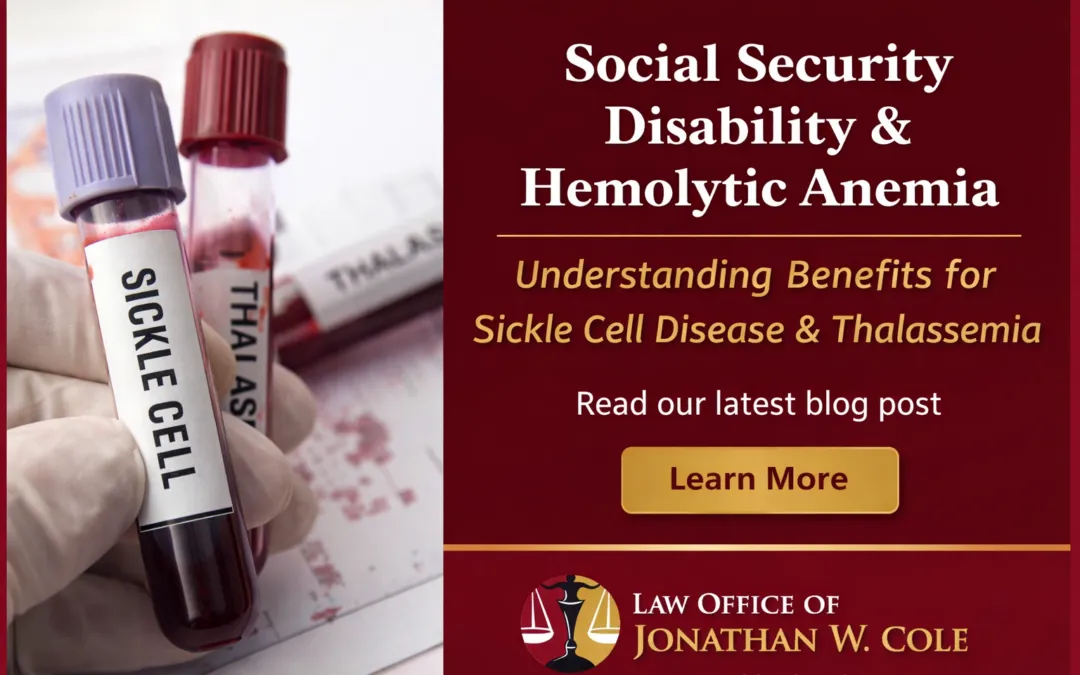
Social Security Disability and Hemolytic Anemias: Understanding Listing 7.05
Living with a serious blood disorder like sickle cell disease or thalassemia can affect every part of daily life. Many Illinois families are surprised to learn that these conditions may qualify for Social Security Disability benefits, but only if specific medical criteria are met.
One of the most important rules Social Security uses is Listing 7.05, which covers hemolytic anemias, including sickle cell disease, thalassemia, and their variants.
Below, we explain what this listing means, what Social Security looks for, and why proper documentation is critical.
What Are Hemolytic Anemias?
Hemolytic anemias are blood disorders where red blood cells are destroyed faster than the body can replace them. Common examples include:
-
Sickle cell disease
-
Beta thalassemia
-
Other inherited or acquired hemolytic anemia variants
These conditions can cause chronic pain, fatigue, infections, organ damage, and repeated hospitalizations, often making it impossible to maintain full-time employment.
How Social Security Evaluates Hemolytic Anemias (Listing 7.05)
The Social Security Administration does not approve disability claims based on diagnosis alone. Instead, it looks at how severe the condition is and how often serious complications occur.
A claimant can meet Listing 7.05 in any one of the following ways:
1. Frequent Painful (Vaso-Occlusive) Crises
This applies most commonly to individuals with sickle cell disease.
To qualify under this category, medical records must show:
-
At least six painful crises within a 12-month period
-
Each crisis must:
-
Require parenteral narcotic medication (IV or intramuscular pain treatment)
-
Be at least 30 days apart from the next crisis
-
Emergency room visits and hospital records are critical here. Oral pain medication alone usually does not meet the standard.
2. Repeated Hospitalizations Due to Complications
Some individuals experience severe complications rather than frequent pain crises.
This category requires:
-
At least three hospitalizations within a 12-month period
-
Each hospitalization must:
-
Be at least 30 days apart
-
Last at least 48 hours
-
Importantly, Social Security allows the 48 hours to include:
-
Time spent in a hospital emergency department, or
-
Time at a comprehensive sickle cell disease center immediately before admission
Clear admission and discharge records are essential.
3. Persistently Low Hemoglobin Levels
Hemolytic anemia can also qualify based on lab results alone.
This standard requires:
-
Hemoglobin levels of 7.0 g/dL or less
-
Occurring at least three times within a 12-month period
-
Each measurement must be:
-
At least 30 days apart
-
Properly documented by laboratory testing
-
Consistent bloodwork showing severe anemia can meet the listing even without hospitalizations.
4. Beta Thalassemia Major Requiring Lifelong Transfusions
This category applies to individuals with beta thalassemia major, one of the most severe forms of thalassemia.
To qualify:
-
The condition must require lifelong red blood cell (RBC) transfusions
-
Transfusions must occur at least once every 6 weeks
-
The transfusions must be necessary to maintain life
Treatment records from hematologists and transfusion centers are especially important for these claims.
Why Documentation Matters So Much
Social Security disability claims are often denied, not because the condition isn’t serious, but because the medical evidence doesn’t line up with the listing requirements.
Missing records, unclear timelines, or undocumented ER visits can make the difference between approval and denial.
An experienced attorney can help:
-
Identify which part of Listing 7.05 applies
-
Gather the right medical records
-
Present the evidence clearly and correctly
Help for Illinois Families Facing Disability Challenges
If you or a loved one is living with sickle cell disease, thalassemia, or another hemolytic anemia, you may have options—but navigating Social Security’s rules can be overwhelming.
If you have questions about your estate plan or a probate matter, contact the Law Office of Jonathan W. Cole P.C. at (708) 529-7794 — Your Neighborhood Law Firm.
📞 (708) 529-7794 | Law Office of Jonathan W. Cole P.C. — “Your Neighborhood Law Firm.”