
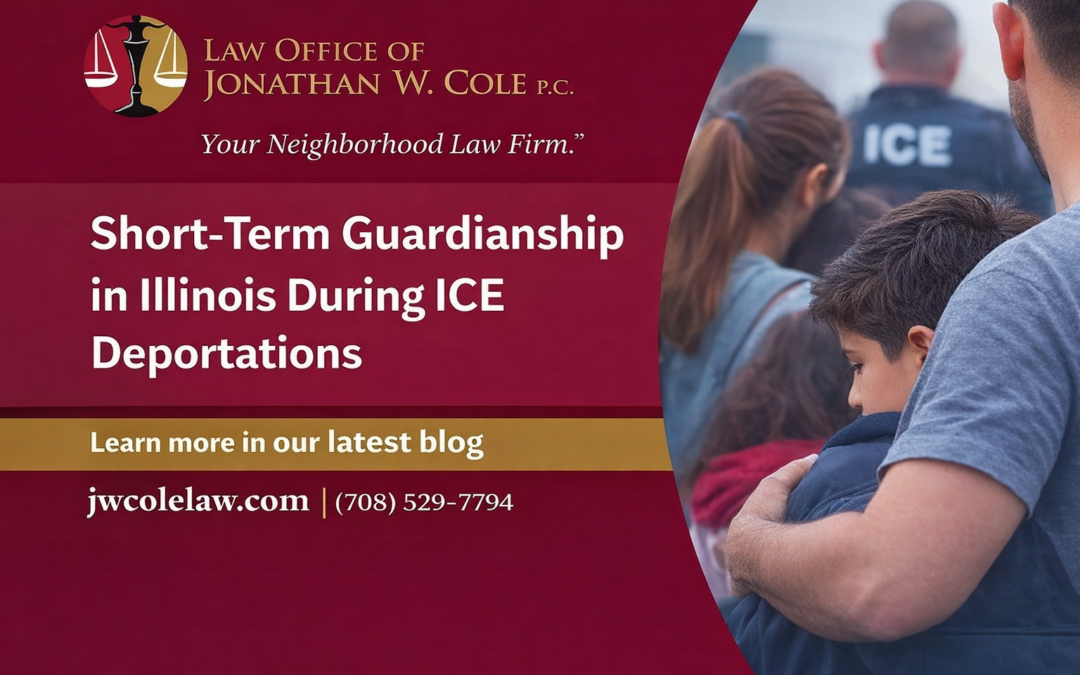
How Short-Term Guardianship Can Help Illinois Families During Immigration Enforcement
When parents face the fear of detention or deportation, one of their biggest concerns isn’t legal process, it’s their children’s safety and well-being. In Illinois, a legal option called short-term guardianship is being used more often by immigrant families to help protect children if something unexpected happens to their parent or guardian.
This is not only a legal tool, it’s a way to give families peace of mind during uncertain times. Here’s what Illinois families should know.
What Is Short-Term Guardianship?
Short-term guardianship is a legal notice a parent can complete that gives another adult temporary custody of their child, usually for up to one year, in case of an emergency. This tool has been part of Illinois law for decades, originally created to help families during medical or military emergencies and adopted into the Probate Act.
Rather than going through a formal court process, the parent fills out a standard form that names a trusted adult who can make decisions for the child if certain circumstances occur, like if a parent is detained, arrested, or otherwise unable to care for the child.
Why Families Are Choosing It — Especially Now
In recent years, federal immigration enforcement activity, including actions by U.S. Immigration and Customs Enforcement (ICE) has increased in the Chicago area and across Illinois. Amid these enforcement efforts, many immigrant parents have asked the same question: Who will care for my children if I am taken away?
Short-term guardianship provides a simple legal solution that:
- Lets parents name someone they trust to care for their child;
- Avoids a lengthy and costly court guardianship process; and
- Doesn’t require expensive filings or fingerprinting.
Legal aid groups in Chicago report that more families are filling out these forms and attending information sessions to understand how the process works and why it matters.
How It Works in Practice
To complete a short-term guardianship, a parent must:
- Fill out the short-term guardianship form in front of two adult witnesses;
- Clearly name the adult who will temporarily care for their child; and
- Specify when the guardianship should begin, for example, if the parent is detained or removed.
It’s important to understand what this does and doesn’t do:
✔️ What it does
- Gives another adult legal authority to care for the child temporarily;
- Helps prevent unnecessary state custody involvement;
- Can be revoked or changed if circumstances change.
❌ What it doesn’t
- It is not a long-term guardianship and only lasts up to one year;
- It does not give full parental rights like custody of passports on its own; and
- It won’t outweigh the rights of the other parent if they object.
Why Legal Advice Matters
Because short-term guardianship affects children’s lives, it’s always smart to talk with a lawyer about your specific situation, especially if you’re facing complex family circumstances, possible custody disputes, or immigration concerns.
A qualified attorney can help you:
- Understand Illinois law and how guardianship works;
- Decide if a short-term guardianship or a longer one makes more sense; and
- Help fill out and properly execute the legal paperwork when needed.
Protecting Children and Families Together
No parent should face the worry of “what happens to my child if I’m taken away?” without a plan in place. In Illinois, short-term guardianship offers a practical, low-barrier option that gives immigrant families a tool to protect their children legally and emotionally.
If you’re considering short-term guardianship, or want to explore how to include it in your broader family or estate planning, we can help you understand your options and make a plan that brings peace of mind.
📞 (708) 529-7794 | Law Office of Jonathan W. Cole P.C. — “Your Neighborhood Law Firm.”