
If you or a loved one has undergone a pancreas transplant, you’ve already been through a serious and life-changing medical journey. What many Illinois residents don’t realize is that the Social Security Administration (SSA) recognizes just how disruptive this procedure can be — and, in many cases, it automatically qualifies you for disability benefits for a period of time.
Here’s what you need to know about Social Security Disability and pancreas transplantation.
How Social Security Views Pancreas Transplants
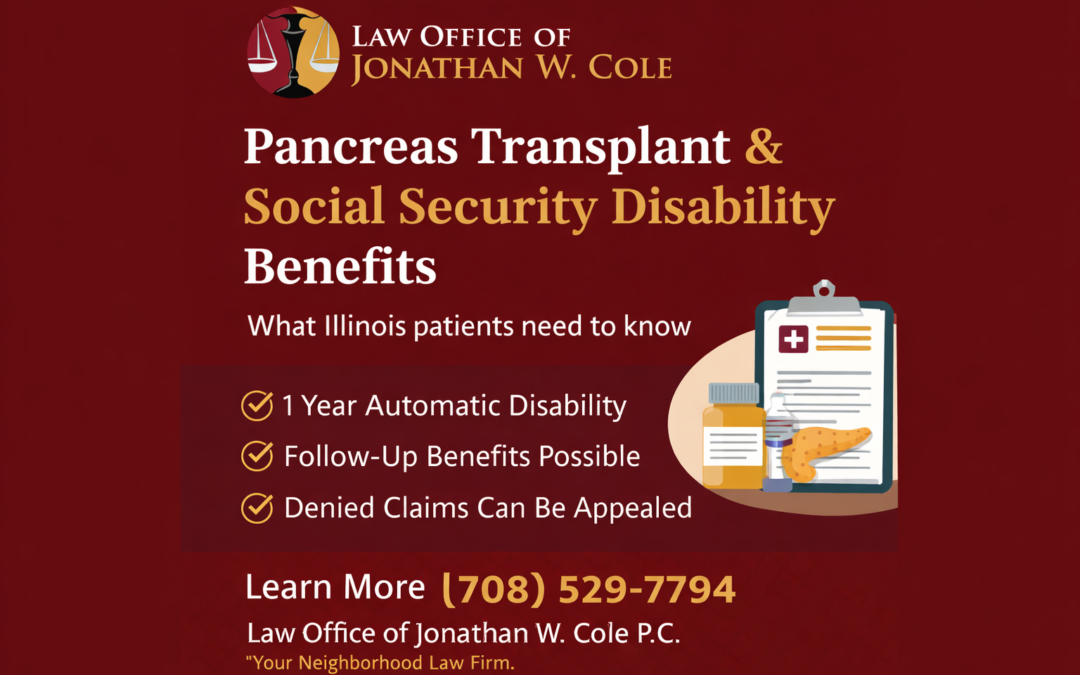
Under SSA Listing 5.12, a person who has received a pancreas transplant is considered disabled for one full year starting from the date of the transplant.
This means:
-
You do not need to prove ongoing complications during that first year
-
Social Security assumes the recovery period alone is disabling
-
You may qualify for SSDI or SSI benefits during that 12-month window
This rule exists because pancreas transplants require significant recovery time, immunosuppressive medications, frequent medical monitoring, and lifestyle adjustments that can make working impossible.
What Happens After the One-Year Period?
After the initial year, Social Security does not automatically end benefits — but they will review your case.
At that point, SSA looks at your residual impairments, meaning the lasting effects of the transplant or related conditions, such as:
-
Ongoing fatigue or weakness
-
Complications from immunosuppressive medications
-
Infections or rejection episodes
-
Continued diabetes-related complications
-
Kidney, digestive, or neurological issues
If these conditions still prevent you from working full-time, you may continue to qualify for disability benefits.
You May Qualify Even Without Transplant Rejection
A common misconception is that benefits only continue if the transplant “fails.” That is not true.
Many people still struggle with:
-
Medication side effects
-
Reduced stamina
-
Secondary organ damage
-
Frequent medical appointments
Social Security must consider how your condition affects your ability to function, not just whether the transplant was technically successful.
Why These Claims Are Often Denied
Even though the law is clear, pancreas transplant disability claims are often denied because:
-
Medical records are incomplete
-
Follow-up impairments are not clearly documented
-
Social Security underestimates functional limitations
-
Claimants don’t know what evidence matters most
Having proper documentation — and presenting it the right way — can make the difference between approval and denial.
How an Attorney Can Help
An experienced disability attorney can help by:
-
Making sure the automatic one-year disability period is applied correctly
-
Gathering medical evidence showing ongoing limitations
-
Communicating effectively with Social Security
-
Appealing a denial if benefits are wrongfully terminated
For Illinois residents, understanding both federal disability law and how it’s applied locally is critical.
Get Help With Your Disability Claim
If you or a family member has had a pancreas transplant and are struggling to work, you may be entitled to Social Security Disability benefits — both immediately and long-term.
📞 If you have questions about your estate plan or a probate matter, contact the Law Office of Jonathan W. Cole P.C. at (708) 529-7794 — Your Neighborhood Law Firm.
📞 (708) 529-7794 | Law Office of Jonathan W. Cole P.C. — “Your Neighborhood Law Firm.”