
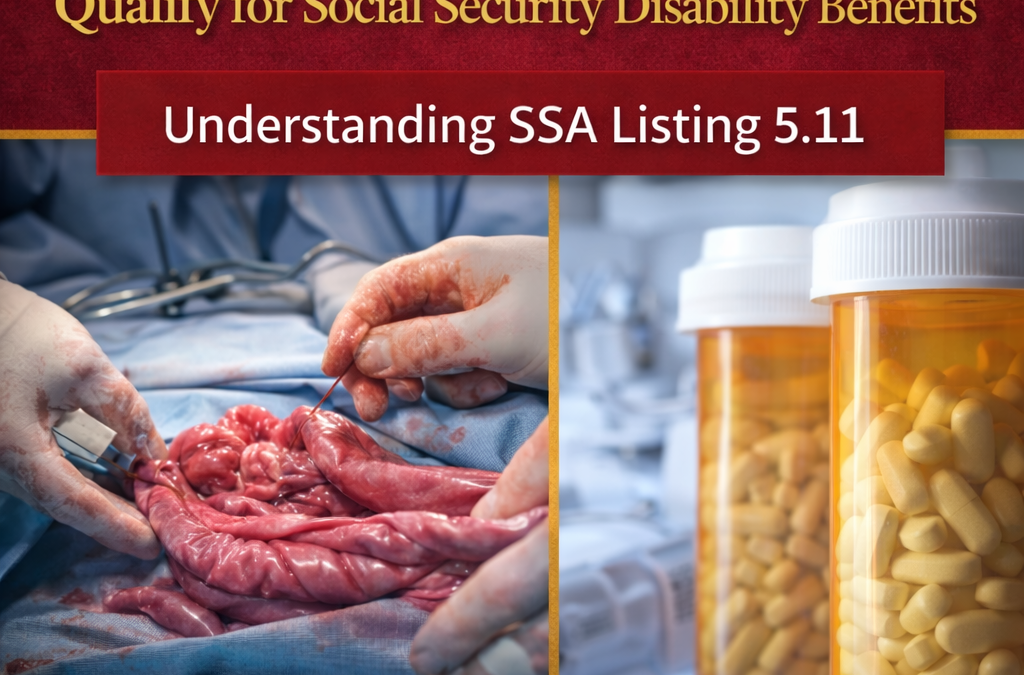
A small intestine transplant is one of the most complex and serious procedures in modern medicine. It is typically performed only when the intestines can no longer absorb enough nutrients to sustain life. Recovery is long, demanding, and often unpredictable.
Because of the severity of this procedure, the Social Security Administration (SSA) specifically addresses small intestine transplantation in its disability rules under Listing 5.11. Understanding how this listing works can help patients and families protect their financial stability during recovery.
SSA Listing 5.11: Small Intestine Transplantation
Automatic Disability for One Year
Under SSA Listing 5.11, an individual is considered disabled for one full year beginning on the date of the small intestine transplant.
During this one-year period:
-
You do not need to prove additional complications
-
You do not need to show you are unable to work beyond the transplant itself
-
Social Security recognizes that recovery, immune suppression, and frequent medical care make sustained employment unrealistic
This automatic disability period exists to allow transplant recipients time to heal without the added stress of fighting for benefits.
What Happens After the One-Year Period?
After the one-year disability period ends, Social Security does not automatically stop benefits. Instead, the SSA evaluates whether you continue to have residual impairments that prevent you from working.
Common residual impairments after a small intestine transplant may include:
-
Chronic fatigue or weakness
-
Ongoing digestive or absorption problems
-
Dependence on specialized nutrition or supplements
-
Side effects from anti-rejection medications
-
Increased risk of infection due to immune suppression
-
Frequent medical appointments or hospitalizations
If these limitations significantly affect your ability to work, you may continue to qualify for disability benefits beyond the initial year.
Medical Evidence That Can Strengthen Your Claim
Strong medical documentation is essential, especially after the automatic disability period ends. Helpful records often include:
-
Transplant surgery reports
-
Follow-up treatment notes from transplant specialists
-
Lab results and nutritional assessments
-
Medication lists and documented side effects
-
Physician opinions explaining functional limitations
-
Records of complications, infections, or hospitalizations
Many claims are denied not because the individual has recovered, but because the medical records do not clearly explain how ongoing symptoms limit daily activities and work capacity.
Why Listing 5.11 Matters for Illinois Families
Small intestine transplants often follow years of severe illness, hospitalizations, and loss of income. Listing 5.11 exists to:
-
Provide immediate financial support during recovery
-
Acknowledge the long-term effects of intestinal failure and transplantation
-
Prevent transplant recipients from being unfairly denied benefits
Understanding this listing can help Illinois residents avoid unnecessary delays or denials during an already difficult time.
Get Trusted Guidance Through the Disability Process
Disability claims involving organ transplants are complex — especially when Social Security begins reviewing benefits after the first year. Having experienced legal guidance can help ensure your medical condition is fully and accurately presented.
📞 If you have questions about your estate plan or a probate matter, contact the Law Office of Jonathan W. Cole P.C. at (708) 529-7794 — Your Neighborhood Law Firm.