
When Gastrointestinal Bleeding Can Qualify for Social Security Disability Benefits
Severe gastrointestinal (GI) bleeding isn’t just frightening — it can be life-threatening and completely disruptive to daily life. For some people, repeated hospitalizations and blood transfusions make it impossible to work.
The good news? Social Security recognizes certain cases of gastrointestinal hemorrhaging as disabling under its medical listings.
One specific rule — Listing 5.02 — can provide a clear path to disability benefits if the medical criteria are met.
What Is Gastrointestinal Hemorrhaging?
Gastrointestinal hemorrhaging refers to significant bleeding somewhere in the digestive tract, which may include the esophagus, stomach, small intestine, or colon.
Common causes include:
-
Peptic ulcers
-
Esophageal varices
-
Inflammatory bowel disease (Crohn’s or ulcerative colitis)
-
Diverticular disease
-
Certain cancers
-
Complications from liver disease
-
Long-term use of medications like NSAIDs or blood thinners
Symptoms often include vomiting blood, black or bloody stools, severe weakness, dizziness, and fatigue — frequently requiring emergency care.
Social Security Listing 5.02 Explained (In Plain English)
Under Listing 5.02, Social Security may consider you disabled if all of the following are true:
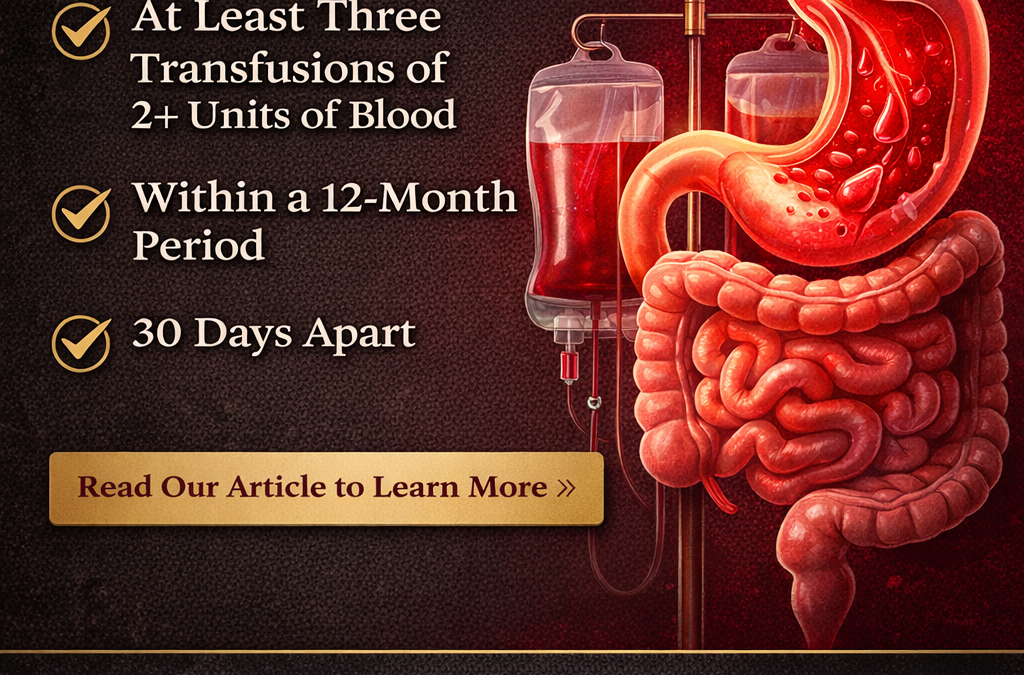
✔️ Repeated Blood Transfusions Are Required
You must have required three separate blood transfusions, and:
-
Each transfusion must involve at least 2 units of blood
-
The transfusions must occur within a consecutive 12-month period
-
Each transfusion must be at least 30 days apart
This requirement is designed to show that the bleeding is ongoing and severe, not a one-time medical event.
✔️ Disability Is Presumed for One Year
If you meet the transfusion requirements, Social Security will generally consider you disabled for one year following the date of your last documented transfusion.
During that one-year period, you do not need to prove additional limitations — the listing itself establishes disability.
What Happens After the One-Year Period?
After the one-year disability period ends, Social Security will re-evaluate your condition to determine whether you remain disabled.
At that point, they will look at:
-
Ongoing anemia or fatigue
-
Weakness, dizziness, or shortness of breath
-
Limitations on standing, walking, lifting, or concentrating
-
Side effects from treatment or medications
-
Any underlying condition causing the bleeding
Even if you no longer meet Listing 5.02, you may still qualify for benefits based on residual functional limitations.
Medical Evidence Is Critical
Strong documentation is essential for a successful disability claim. Helpful records include:
-
Hospital records showing transfusion dates and blood unit amounts
-
Endoscopy or imaging reports identifying the bleeding source
-
Lab results showing anemia or low hemoglobin
-
Physician notes describing ongoing symptoms and work limitations
-
Follow-up treatment records
Missing or incomplete medical records are a common reason valid claims are denied.
Why Many Claims Are Denied — Even When the Condition Is Serious
Social Security often denies claims when:
-
Transfusions are not clearly documented
-
The timing between transfusions isn’t properly established
-
Medical records don’t specify the number of blood units given
-
The long-term effects of the condition aren’t explained
This is where experienced legal guidance can make a real difference.
How an Illinois Disability Attorney Can Help
A disability claim involving gastrointestinal bleeding requires careful presentation of medical evidence and strict attention to Social Security’s rules.
An attorney can:
-
Confirm whether you meet Listing 5.02
-
Gather and organize hospital and transfusion records
-
Work with your doctors to document ongoing limitations
-
Appeal a denial if Social Security gets it wrong
You Don’t Have to Navigate This Alone
If you or a loved one has suffered repeated gastrointestinal bleeding and blood transfusions, you may be entitled to Social Security Disability benefits — but timing and documentation matter.
📞 If you have questions about your estate plan or a probate matter, contact the Law Office of Jonathan W. Cole P.C. at (708) 529-7794 — Your Neighborhood Law Firm.