
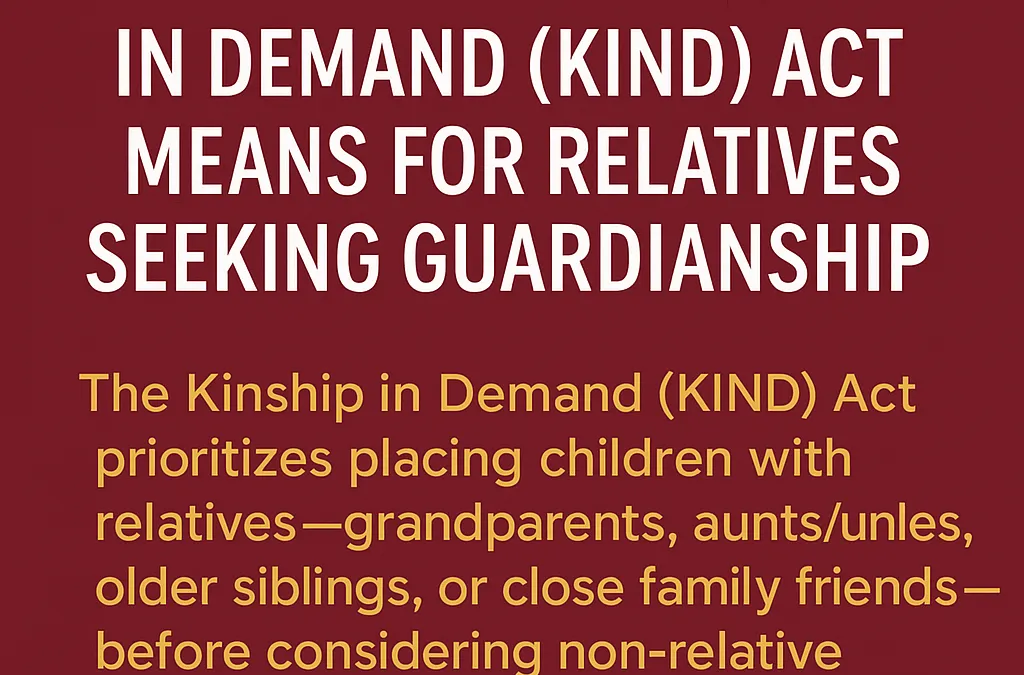
Putting Family First: A Major Shift in Illinois Child Guardianship Law
In February 2025, Illinois took a major step to support children in foster care and the relatives who care for them. The Kinship in Demand (KIND) Act prioritizes placing children with relatives — grandparents, aunts/uncles, older siblings, or close family friends — before considering non-relative foster homes. This “kin-first” approach makes it easier for families to provide stability and maintain strong family connections.
How the KIND Act Changes Guardianship for Relatives
If you’re a relative considering guardianship of a child in care, the KIND Act introduces several important changes:
1. Easier Certification for Relatives
Previously, relatives had to meet the same strict licensing standards as non-relative foster parents — a complicated process that often discouraged family members from stepping in. The KIND Act allows simplified “kinship caregiver home” certification, making it more accessible for relatives to become legal guardians or certified caregivers.
2. Equal Financial Support
Once certified, relative caregivers receive the same foster-care maintenance payments as licensed foster parents. This financial support helps cover everyday costs of raising a child, making long-term guardianship more feasible for families.
3. Pathway to Subsidized Guardianship
The law recognizes guardianship as a permanent placement option alongside adoption. Relatives can pursue guardianship if reunification with the birth parents isn’t possible — ensuring children have a safe, stable home while still maintaining family ties.
4. Stronger Family-Finding Efforts
DCFS now has a legal obligation to locate and involve relatives in permanency planning. Juvenile courts also have enhanced oversight to ensure that children are placed with family whenever possible.
5. Broader Definition of Family
The KIND Act expands the definition of who can qualify as a kinship caregiver. Not only blood relatives, but also “fictive kin” — close family friends or adults with strong emotional ties to the child — may now become guardians under Illinois law.
Why This Matters for Illinois Families
-
For children: Staying with relatives provides stability, reduces trauma, and strengthens family connections.
-
For relatives: Easier certification and financial support remove major barriers to becoming guardians.
-
For communities: Keeping children with family preserves cultural, emotional, and social ties while reducing the strain on non-relative foster homes.
What You Should Do Next
If you are a grandparent, aunt/uncle, or close family friend caring for a child in foster care, consider these steps:
-
Contact DCFS: Express interest in becoming a kinship caregiver or guardian.
-
Ask about kinship caregiver home certification: Learn about the simplified certification process under the KIND Act.
-
Explore subsidized guardianship options: Find out if guardianship could provide a permanent, supported home for the child.
-
Consult an Illinois guardianship attorney: Legal guidance can help navigate paperwork, court timelines, and certification requirements.
The KIND Act is a powerful tool for Illinois families, making guardianship more accessible, supporting relatives financially, and prioritizing children’s stability and family connections. If you’ve been caring for a child and wondering about guardianship, now is the time to explore your options.
📞 (708) 529‑7794 | Law Office of Jonathan W. Cole P.C. — “Your Neighborhood Law Firm.”